

If you've been researching Turkey Tail (Coriolus/Trametes versicolor), you've almost certainly come across terms such as polysaccharides, beta-glucans, PSK, and PSP. These names are often used interchangeably, but they do not all mean the same thing.
Understanding the relationship between them makes it much easier to evaluate both the scientific research and the quality of mushroom supplements.
What Are Polysaccharides?
Polysaccharides are simply large carbohydrate molecules made by linking many individual sugar molecules together.
The word comes from:
- Poly = many
- Saccharide = sugar
Nature produces many different polysaccharides. Some serve as energy storage, while others provide structural support.
Examples include:
- Starch
- Glycogen
- Cellulose
- Chitin
- Beta-glucans
In other words:
Every beta-glucan is a polysaccharide, but not every polysaccharide is a beta-glucan.
This distinction is important because different polysaccharides have very different biological properties.
What Are Beta-Glucans?
Beta-glucans are a specific family of polysaccharides built entirely from glucose molecules joined together by beta glycosidic bonds.
The exact arrangement of these bonds determines how the molecule behaves.
Beta-glucans are naturally found in:
- Turkey Tail (Coriolus/Trametes versicolor)
- Shiitake
- Maitake
- Reishi
- Yeasts
- Oats
- Barley
However, not all beta-glucans are identical.
For example, cereal beta-glucans found in oats and barley have a different molecular structure from mushroom beta-glucans. Mushroom beta-glucans commonly contain β-(1→3) backbones with β-(1→6) branching, structural features that have been widely studied for their interactions with the immune system.
Why Structure Matters
Imagine giving ten people the same box of Lego bricks.
Each person has exactly the same pieces.
However, one builds a bridge, another builds a castle, and another builds a racing car.
The pieces are identical.
The structure is different.
Beta-glucans work in much the same way.
Although they are all built from glucose, the arrangement of those glucose molecules creates different three-dimensional structures, which influences how they interact biologically.
Where Do PSK and PSP Fit In?
PSK and PSP are not simply beta-glucans.
They are far more complex.
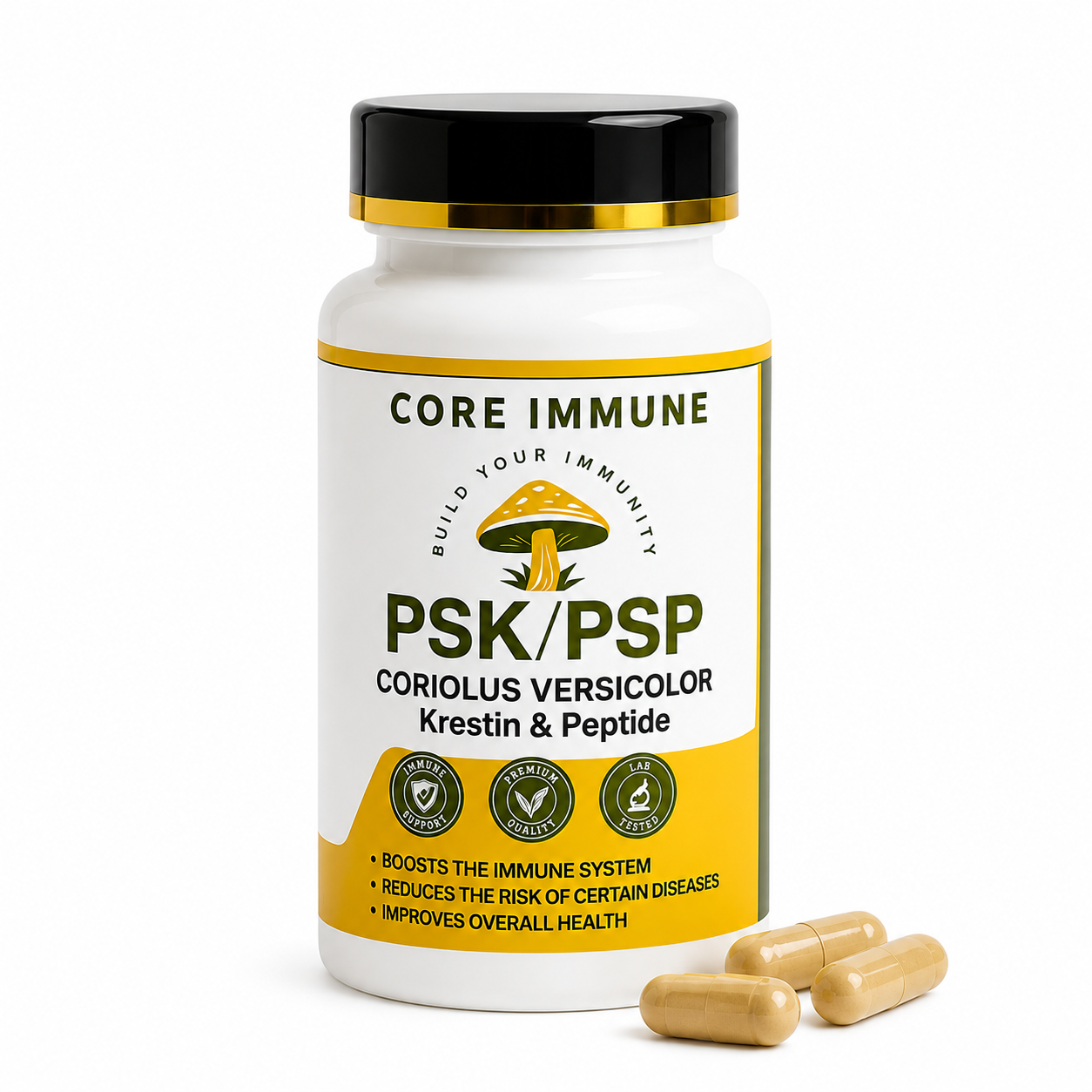
Both are naturally derived from the Turkey Tail mushroom and are best described as protein-bound polysaccharide complexes.
This means they contain:
- Beta-glucans
- Other polysaccharides
- Small amounts of protein
- Additional naturally occurring carbohydrate components
Rather than being a single purified molecule, they are complex biological extracts.
What Is PSK?
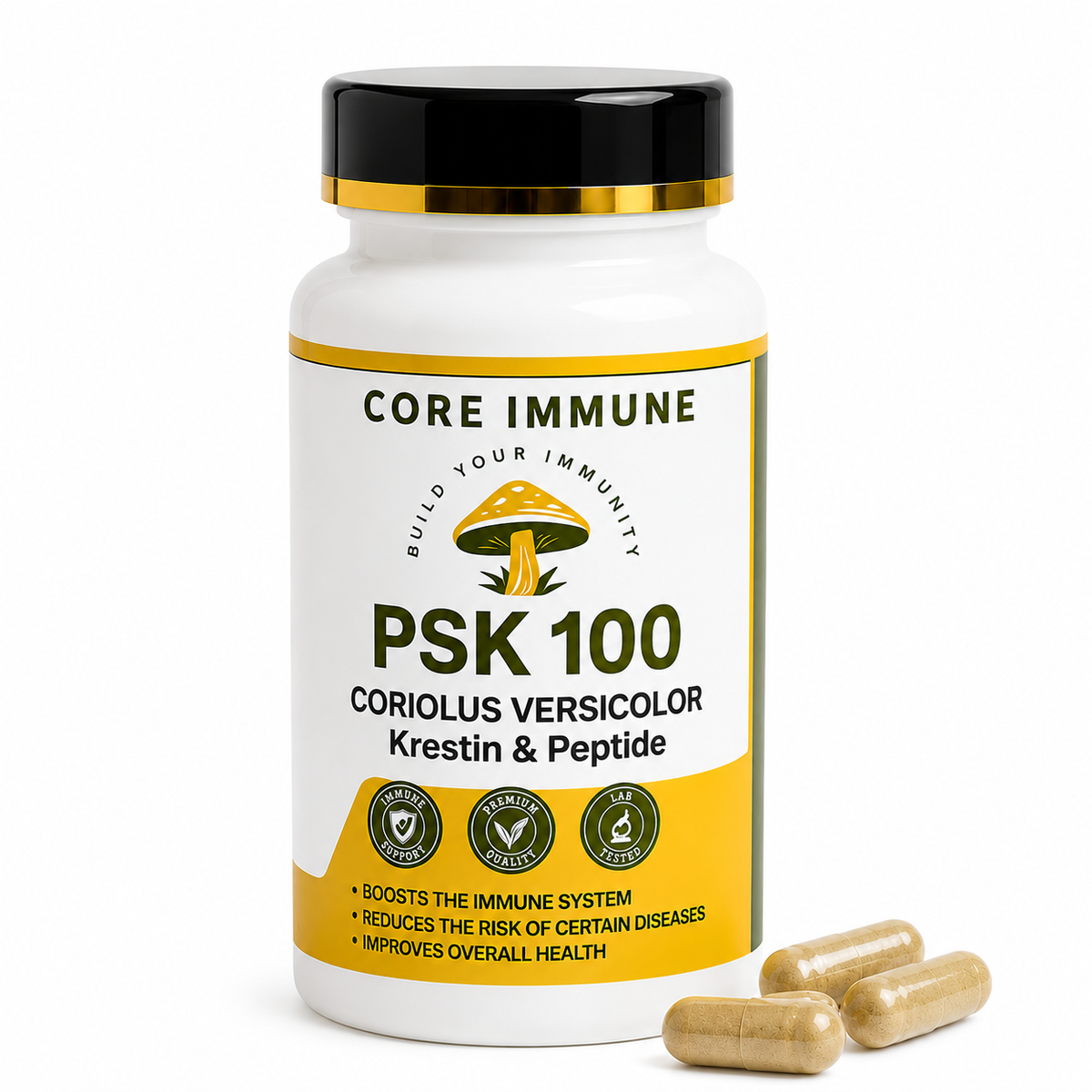
PSK stands for Polysaccharide Krestin.
It was developed in Japan from a selected strain of Coriolus/Trametes versicolor.
Beginning in the 1970s, PSK was studied extensively and approved in Japan as a prescription biological response modifier used alongside standard cancer treatments for certain cancers. It is not approved as a cancer medicine in most other countries.
What Is PSP?
PSP stands for Polysaccharopeptide.
It was developed independently in China using a different strain of Coriolus/Trametes versicolor.
Although PSP and PSK are chemically very similar, they are not identical.
Researchers have identified small differences in their carbohydrate composition and protein content, reflecting the different mushroom strains and manufacturing processes used.
Are PSK and PSP Pure Beta-Glucans?
No.
This is one of the biggest misconceptions.
PSK and PSP contain beta-glucans, but they also include:
- Other complex polysaccharides
- Peptides and proteins
- Additional naturally occurring fungal compounds
They are best viewed as protein-bound polysaccharide extracts, not isolated beta-glucans.
Why Do Researchers Focus on Beta-Glucans?
Scientists believe beta-glucans play an important role in many of the biological activities associated with medicinal mushrooms.
Laboratory and clinical research has shown that certain mushroom beta-glucans can interact with components of the innate immune system, including macrophages, dendritic cells and natural killer (NK) cells. Researchers continue to investigate exactly how these interactions occur and what they may mean in different clinical settings.
It is important to note that immune modulation does not simply mean "stimulating" the immune system. Depending on the context, immune responses may be enhanced, balanced or regulated.
Why Do Some Products List "Polysaccharides" While Others List "Beta-Glucans"?
Years ago, many manufacturers measured only total polysaccharides.
The problem is that total polysaccharides include compounds that may not be unique to the mushroom itself, such as starches or other carbohydrates.
Today, many experts regard beta-glucan content as a more informative quality marker for mushroom extracts because it more specifically reflects the fungal bioactive polysaccharides. However, beta-glucan percentage alone does not determine overall product quality, since extraction methods, raw material, species identification and manufacturing standards also matter.
The Relationship at a Glance
Think of the terms like this:
Polysaccharides
- Large family of complex carbohydrates.
↓
Beta-Glucans
- A specialised group within the polysaccharide family.
↓
PSK and PSP
- Complex Turkey Tail extracts containing beta-glucans together with proteins and other naturally occurring polysaccharides.
Key Takeaways
- Polysaccharides are a broad class of complex carbohydrates.
- Beta-glucans are one specific type of polysaccharide.
- Mushroom beta-glucans differ structurally from cereal beta-glucans.
- PSK and PSP are protein-bound polysaccharide complexes derived from Coriolus/Trametes versicolor.
- They contain beta-glucans but are not composed exclusively of beta-glucans.
- Most published research on PSK and PSP has investigated these complete complexes rather than isolated beta-glucans.
Understanding these distinctions helps explain why the scientific literature often uses several different terms when discussing Turkey Tail. Although related, polysaccharides, beta-glucans, PSK, and PSP each describe different levels of the same biological picture.




 Home
Home
 Mia
Mia
 Shop
Shop

 Support